How To Pay Alibaba Suppliers (Payment Methods Compared)
Alibaba is a great resource for eCommerce businesses to search and filter for the best manufacturers in China (and beyond).
But once you narrow down your search, test a sample, and negotiate a contract…
How do you actually pay Alibaba suppliers?
There are several different options, each with its pros and cons.
In this guide, we’ll discuss these options to help you determine which methods best suit your business.
1. Credit/debit card
Using a credit or debit card on Alibaba is a straightforward and secure process—perhaps the easiest option available to you.
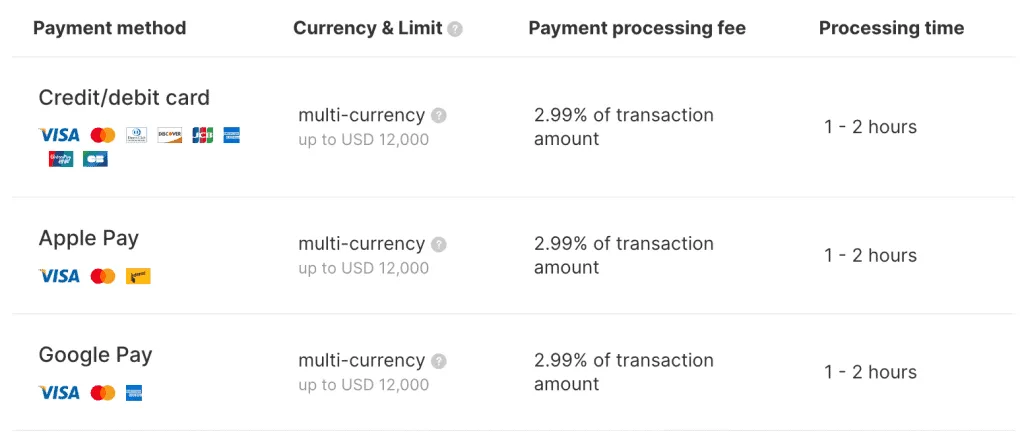
When you check out, you can choose to pay with any major credit or debit card, including Visa, MasterCard, and American Express.
Alibaba also supports mobile payment options like Apple Pay and Google Pay, making it even more convenient if you prefer using your smartphone for transactions.
To pay with a credit or debit card, simply enter your card details on the checkout page.
For Apple Pay or Google Pay, select the respective option and authenticate the payment through your device.
Key info
-
Transaction limit: $12,000 USD
-
Transaction fee: 2.99%
-
Processing time: 1-2 hours
Pros & cons
-
Fast and convenient
-
Widely accepted
-
Added protection from credit card company
-
Can earn credit card rewards or points
-
Potential foreign transaction fees
-
Security concerns if using public Wi-Fi
-
Not all cards may be accepted
2. PayPal
PayPal is a popular and secure payment method on Alibaba.
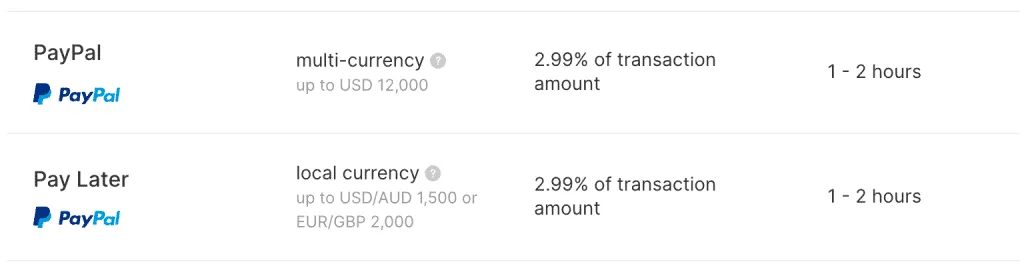
To use PayPal, simply select it as your payment option at checkout. You’ll be redirected to the PayPal login page, where you can confirm the payment.
You can use the same card you would with a standard card payment, too. Just with that added PayPal protection.
If you prefer spreading out your payments, you can use PayPal Pay Later, which allows you to buy now and pay in installments.
NOTE
You’ll often find Alibaba suppliers aren’t keen to accept PayPal as a preferred payment method due to the extra payment processing fee. You can remedy this by offering to pay a slightly higher price—the benefit to you is the extra peace of mind with PayPal’s protection.
Key info
-
Transaction limit: $12,000 USD
-
Transaction fee: 2.99%
-
Processing time: 1-2 hours
Pros & cons
-
Secure and easy to use
-
Buyer protection for eligible purchases
-
Option to pay in installments with PayPal Pay Later
-
Fees for currency conversion
-
Pay Later might have interest charges
-
Suppliers may be reluctant to accept
3. Wire transfer
Choosing to pay Alibaba suppliers with a wire transfer is a reliable and cost-effective method for large transactions.
It doesn’t come with the same protections as PayPal or credit card payments, so you might feel more comfortable sending an initial payment with one of these methods first.
Then, once trust has been built between you and the supplier, you can move to wire transfers.
To pay by wire transfer, select this option at checkout.
Alibaba will provide the bank details you need, which will vary depending on which country you’re sending money from. You’ll then initiate the transfer from your bank. Once the funds are received, Alibaba will process your order.
Key info
-
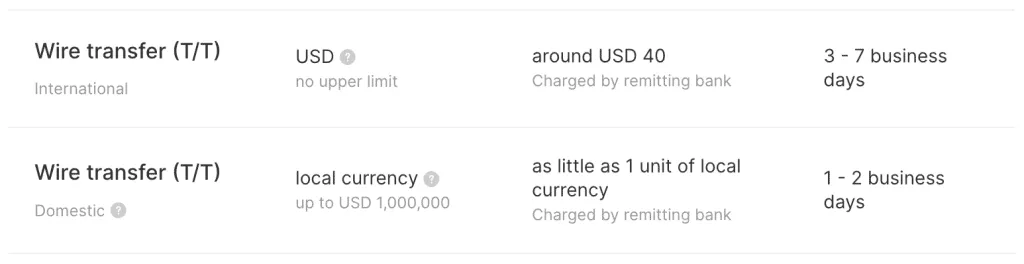
Transaction limit: No upper limit for international wire transfers, $1 million USD limit for domestic wire transfers
-
Transaction fee: Around $40 USD - depends on remitting bank.
-
Processing time: 3-7 business days for international wire transfers, 1-2 business days for domestic
Pros & cons
-
Safe and cost-effective for large sums
-
No credit card limits
-
Direct bank-to-bank transfer
-
Slower processing time
-
Fewer protections than credit card payments or PayPal
-
More manual process
4. AfterPay
AfterPay allows you to buy now and pay later in interest-free installments.

To use AfterPay on Alibaba, select it as your payment method at checkout. You’ll need to log into your AfterPay account to complete the transaction.
This option helps manage expenses by spreading payments over time.
Key info
-
Transaction limit: $2,000 USD
-
Transaction fee: 2.99%
-
Processing time: 1-2 hours
Pros & cons
-
No interest fees if paid on time
-
Spread payments over time
-
Easy to manage through the AfterPay app
-
Late fees for missed payments
-
Not available for all purchases
-
Requires good credit standing to use
5. Localized methods
Depending on the country you’re paying from, you may also see some extra options available to you.
For example:
-
In the UK you can use Trustly
-
In Germany, you can use Giropay and Sofort
There are a few other countries with unique options, so it’s worth looking at.
The payment limit, fees, and processing time vary widely, so check the options available to you carefully.
What about Western Union?
You might have noticed we’ve missed Western Union out. It’s for good reason.
Western Union gives buyers far less protection, and if a supplier insists on Western Union and refuses to accept other payment methods… it’s a big red flag.
Avoid using Western Union and stick to one of the other, safer payment methods above.
Choosing the best Alibaba payment method
Selecting the best method to pay Alibaba suppliers is crucial for ensuring smooth transactions, cost efficiency, and security.
When deciding how to pay on Alibaba, consider these aspects:
1. Transaction volume
High Volume: If you’re dealing with large orders, a wire transfer might be the best option. It’s safe and can handle large sums without the limitations of credit card limits.
Low to Medium Volume: For smaller orders, credit/debit cards or PayPal might be more convenient. They offer quick processing and are widely accepted.
2. Transaction fees
Credit/Debit Cards: Watch out for foreign transaction fees your bank might charge. For example, if you’re ordering frequently, these fees can add up.
PayPal: PayPal has its own fee structure, especially for currency conversion. However, it offers buyer protection, which can be a significant advantage.
Wire Transfer: While usually free for the recipient, your bank might charge you for sending a wire transfer. This method is best for large transactions where a small fee won’t significantly impact the overall cost.
AfterPay: AfterPay doesn’t charge interest if payments are made on time, but it’s important to ensure you can meet the installment deadlines to avoid late fees.
3. Security
Credit/Debit Cards and PayPal: Both offer strong security measures and fraud protection. For instance, PayPal’s buyer protection can be very reassuring if you’re worried about disputes.
Wire Transfer: While secure, ensure you’re dealing with a trustworthy supplier. Once the money is sent, it’s challenging to get it back if something goes wrong.
Mobile Payments (Apple Pay/Google Pay): These options offer an extra layer of security through device authentication, making them a safe choice for smaller transactions.
4. Ease of use
Credit/Debit Cards: These are straightforward and quick. For example, if you’re placing frequent small orders, this method saves time.
PayPal: Easy to use, especially if you already have an account. It also integrates well with many accounting systems, helping you keep track of your expenses.
Wire Transfer: This is more manual and involves more steps, which can be cumbersome for frequent small transactions but works well for large, infrequent orders.
AfterPay: This is excellent for managing cash flow, especially if your business is in its early stages and needs flexibility. It allows you to spread out payments without immediate financial strain.
Example scenarios
Scenario 1: Small boutique ordering custom products monthly
-
Best Method: Credit/Debit Card or PayPal
-
Reason: Quick processing, good for frequent, smaller orders, and offers buyer protection.
Scenario 2: Established business placing large annual orders
-
Best Method: Wire Transfer
-
Reason: Handles large sums efficiently, fewer limits compared to credit cards.
Scenario 3: New business managing cash flow
-
Best Method: AfterPay
-
Reason: Spread out payments over time, no immediate large outlay, interest-free if paid on time.
Choosing the right payment method depends on your business’s transaction volume, need for security, fee considerations, and ease of use.
By thinking through these factors and your specific needs, you can select the most suitable payment method for your business.
Using Alibaba Trade Assurance
Alibaba Trade Assurance is a free service designed to protect your orders and ensure your suppliers meet the agreed terms. It offers a layer of security and peace of mind, making it an excellent tool for eCommerce businesses. Here’s how to make the most of Alibaba Trade Assurance.
What is Trade Assurance?
Trade Assurance is a free service offered by Alibaba that helps ensure suppliers meet product quality and delivery times. It covers you in case of shipping delays, quality issues, or order discrepancies.
When you place an order with a Trade Assurance supplier, your payment is protected. If the supplier fails to meet the agreed terms, Alibaba can refund your payment.
Benefits of Trade Assurance
-
Peace of Mind: Knowing your order is protected allows you to focus on other aspects of your business. For example, you can confidently place larger orders without the fear of losing money if something goes wrong.
-
Quality Assurance: Trade Assurance encourages suppliers to maintain high standards. This means better quality products for your business.
-
Dispute Resolution: In case of any issues, Alibaba provides a structured process to resolve disputes. This saves you time and effort compared to dealing with problems on your own.
How to use Trade Assurance
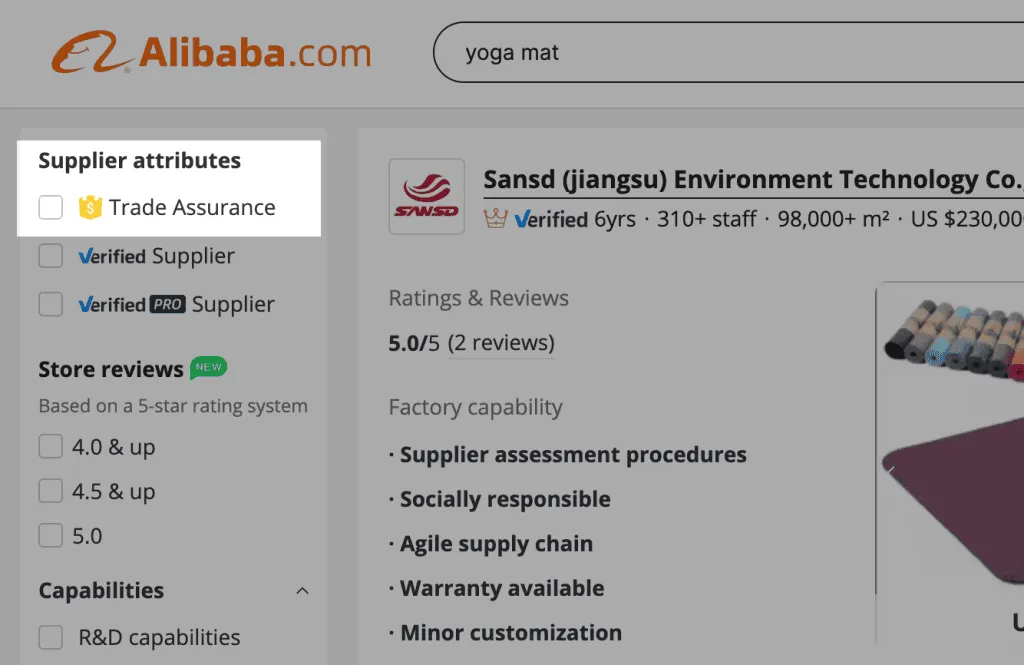
- Find Trade Assurance Suppliers: Use Alibaba’s filters to find suppliers who offer Trade Assurance or look for the Trade Assurance logo on supplier profiles.
-
Place Your Order: When you find a suitable supplier, place your order through Alibaba. Ensure all terms (product details, delivery date, etc.) are clearly specified in the contract.
-
Make Payment: Pay through Alibaba’s secure payment gateway. This ensures your payment is protected under Trade Assurance.
-
Track Your Order: Monitor the progress of your order through Alibaba. If there are any issues, communicate with your supplier to resolve them.
-
Receive Your Order: Upon receiving your order, check the quality and quantity. If everything is as agreed, confirm receipt. If there are issues that can’t be resolved directly with the supplier, you can file a claim through Trade Assurance.
Using Alibaba Trade Assurance adds a layer of security to your transactions, ensuring that suppliers meet their obligations.
It’s particularly beneficial for businesses placing large orders or trying new suppliers. By following these steps, you can make the most of Trade Assurance.
Frequently asked questions
What are the safest Alibaba payment methods?
The safest payment methods on Alibaba are credit cards or PayPal. Alibaba offers a secure payment service, and the added protection of Trade Assurance, but using a credit card or PayPal just gives that extra layer of protection when pay suppliers for the first time.
What currencies can I use to pay on Alibaba?
Alibaba supports multiple currencies, including USD, EUR, GBP, and many others. The currency options depend on the payment method and the supplier. Always confirm with the supplier if you can pay in your preferred currency.
Are there any additional fees for using Trade Assurance?
No, Trade Assurance is a free service provided by Alibaba. However, standard payment processing fees may apply depending on the method used when you pay overseas suppliers.
Can I use multiple payment methods for a single order?
Alibaba generally requires a single payment method per transaction. However, it’s a common practice to set payment terms up with suppliers on a deposit/balance split. For example, you pay 30% deposit upfront, and 70% balance once production is completed. In this scenario you could use two different payment methods for the different transactions.
How long does it take to get a refund through Trade Assurance?
The duration of the refund payment process varies depending on the complexity of the dispute and the responsiveness of the supplier. Typically, it can take anywhere from a few weeks to several months.
What happens if my supplier doesn’t offer Trade Assurance?
If your supplier doesn’t offer Trade Assurance, you can still place an order, but your payment won’t have the same protection. Consider negotiating payment terms or choosing a supplier that offers Trade Assurance for added security.